Demo Trading: How to Practice Like It’s Real (So You Don’t Get Destroyed Later)
Let me tell you something I learned the hard way: demo trading can either make you dangerous… or make you delusional.
Most people treat demo like a video game. They click random buttons, overtrade, and feel like geniuses. Then they go live, and suddenly the same “strategy” turns into panic, revenge trades, and death by a thousand cuts.
So in this guide, I’ll show you how to use a demo account the right way—how to practice like it’s real, so the day you go live, you’re not shocked by your own emotions.
Why Demo Trading Fails for Most Traders
Demo is supposed to be training. But most traders use it like entertainment.
Here’s what usually happens:
- They risk crazy lot sizes because “it’s not real money”
- They don’t follow any rules because “I’m just testing”
- They open trades all day because they’re bored
- They ignore spreads, slippage, news spikes, and execution reality
- They judge results by “how much money I made” instead of “how well I executed”
And the worst part? Demo can give you false confidence. Confidence without discipline is a trap.
The Real Purpose of Demo Trading
I don’t use demo to feel good. I use demo for proof.
Demo trading is for:
- building a repeatable routine
- learning to follow rules without excuses
- collecting data (so you’re not guessing)
- finding what breaks your strategy
- training execution under pressure (yes, even on demo)
If you want the truth: demo is not there to make you profitable. It’s there to make you consistent.
Step 1: Make Your Demo Account Match Real Life
If your demo account has $100,000 and you plan to go live with $1,000… you’re training in a fantasy world.
Do this instead:
Match these things:
- Account balance (same as your planned live deposit)
- Leverage (same as live)
- Broker conditions (spread, commission, execution style)
- Trading instrument (same symbol you’ll trade live)
- Lot size limits you will actually use live
Because if your demo doesn’t feel like real life, it won’t teach you real lessons.
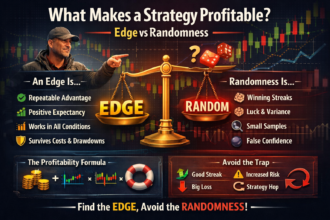
Step 2: Trade Only One Strategy (Stop “Testing” 20 Things)
I know the temptation. You see a video, a new indicator, a new “secret entry.” Your demo becomes a playground.
That’s not practice. That’s confusion.
Pick one simple strategy and commit to it for long enough to learn:
- what a valid setup looks like
- what a weak setup looks like
- how it behaves in different market conditions
- what kind of drawdown is normal
- when it performs best and worst
If you keep changing systems, your brain never builds real skill. It just chases dopamine.
Step 3: Use a Real Risk Plan (Or Demo Is Useless)
This is the biggest difference between “demo fun” and “demo training.”
Use fixed risk:
- risk 0.5% to 1% per trade (like a real trader)
- always define SL before entry
- never move SL wider because “it might come back”
- no doubling lots because you feel smart today
If you can’t follow risk rules on demo, you won’t follow them live. Live will expose you brutally.
Step 4: Add Real Rules (And Treat Them Like Law)
If I’m training like it’s real, I trade like a professional, not like a gambler.
Here are rules that turn demo into real practice:
Execution rules:
- Only trade your session (example: London or New York)
- Max trades per day (example: 1–3)
- No trades during high-impact news
- No revenge trading after a loss
- Stop trading after 2 losses in a day
These rules aren’t there to “limit you.” They’re there to keep you alive.
Step 5: Journal Every Trade (Yes, Even Demo)
A demo without a journal is like going to the gym and never tracking progress.
After every trade, write:
- Why you entered (setup checklist)
- Where your SL/TP were and why
- What timeframe you used
- What the market was doing (trend, range, volatility)
- What you did right
- What you did wrong
- How you felt during the trade
You’re not journaling for motivation. You’re journaling to see patterns—especially the ugly ones.
Step 6: Measure Process, Not Money
Money on demo can lie to you.
You can get lucky for 2 weeks and think you’re ready.
So measure things that actually matter:
Track these metrics:
- % of trades that followed your rules
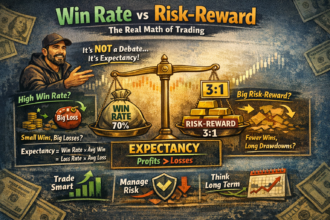
- average R per trade (risk-to-reward outcome)
- win rate + profit factor
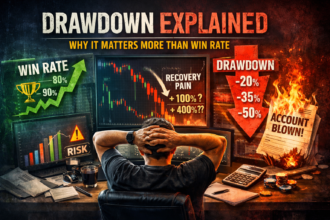
- maximum drawdown
- biggest losing streak
- how often you broke rules after a loss
A trader who makes money while breaking rules is not a skilled trader. He’s just lucky… for now.
Step 7: Practice the Hard Part: Patience
Let me be honest: the hardest skill in trading is not entries.
It’s waiting.
On demo, practice this:
- waiting for A+ setups only
- doing nothing when there’s no clear edge
- closing the platform after your daily plan is done
If you can master boredom on demo, you’ll master emotions on live.
Step 8: Create a “Go Live” Checklist (So You Don’t Rush It)
Most people go live because they feel excited.
That’s not a reason. That’s a mistake.
Here’s a simple checklist I like:
You’re ready to go live when:
- you’ve traded at least 100–200 demo trades on one strategy
- you followed your rules on 90%+ of trades
- your strategy stayed profitable across different weeks/months
- you survived drawdowns without changing the system
- you can accept losses without going crazy
And even then… the first live account should be small. Not because you’re scared—because you’re smart.
The Truth About Demo vs Live (What Nobody Tells You)
Demo teaches your hands. Live tests your heart.
On demo:
- you can lose and feel nothing
On live:
- one loss can feel like a personal insult
That’s why demo is not the finish line. It’s the training camp.
But if you do demo the right way—like it’s real—you’ll walk into live trading with something most people never build:
control.
And in trading… control is everything.
FAQ: Demo Trading Practice Like It’s Real
How long should I demo trade before going live?
Long enough to prove consistency. I like 100–200 trades minimum with one strategy and clean rule-following.
Should I use demo to test new strategies?
Yes—but test one strategy at a time, with a journal and consistent risk. Random testing is just noise.
Is demo trading realistic?
It can be close, but execution can differ. The goal isn’t perfect realism—the goal is building skill and discipline.
Can I become profitable just from demo trading?
Demo builds your process. Profitability comes when you bring the same discipline to live while managing emotions.
Final Word From Me to You
If you treat demo like a game, live will treat you like a victim.
But if you treat demo like a serious training ground—same risk, same rules, same routine—you’re doing what real traders do: building a system, not chasing a feeling.