How to Keep a Trading Journal: What to Record and Why (From a Trader Who Learned the Hard Way)
If you want the fastest shortcut to becoming consistently profitable, it’s not a “secret indicator.” It’s not a new strategy. It’s not even a better broker.
It’s brutal honesty—written down.
A trading journal is where excuses go to die. And once excuses die, patterns show up. Once patterns show up, you can fix them. That’s the whole game.
I’ve journaled through hot streaks that made me feel invincible, and drawdowns that made me question everything. The journal didn’t just improve my trading— it exposed me. My impatience. My need to be right. My tendency to overtrade when I felt “behind.” And that’s why journaling works: it forces you to see what your P&L is really made of.
Here’s how to keep a trading journal, what to record, and why it matters—if your goal is to trade like a professional, not like a gambler with a chart addiction.
What Is a Trading Journal?

A trading journal is a structured record of your trades and your decision-making process. It includes the technical details (entry, stop loss, take profit), but the real value is in the context: your reasoning, your emotions, your execution quality, and what you learned.
If you only record numbers, you’ll improve slowly.
If you record behavior, you’ll improve fast.
Why Keep a Trading Journal?

Let me make this simple: you can’t improve what you don’t measure.
A trading journal helps you:
- Identify what actually makes you money (setups, conditions, times)
- Spot your biggest leaks (bad entries, moving SL, revenge trading)
- Build confidence through proof, not hope
- Reduce emotional trading by turning trading into a process
- Track progress like a real performance athlete
You don’t need more trades. You need better decisions. A journal trains decision-making.
The 3 Types of Trading Journals (Pick One That Fits You)
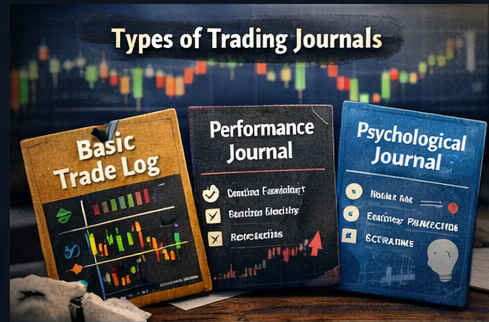
1) The Basic Trade Log (for beginners)
You record the trade details and results. Simple, fast, effective.
2) The Performance Journal (for serious growth)
You record trade details + context + mistakes + process metrics.
3) The Psychological Journal (for emotional traders)
You focus on triggers, emotions, impulses, and rules broken—because that’s the real edge killer.
Personally? I use a mix of #2 and #3. Because strategies don’t usually blow accounts—behavior does.
What to Record in a Trading Journal (The Exact Checklist)

1) Trade Information (the non-negotiables)
Record these every time:
- Date & time
- Market / symbol
- Timeframe
- Direction (buy/sell)
- Entry price
- Stop loss
- Take profit
- Position size / lot size
- Risk per trade (%, or money)
- Result (R multiple is best: +1R, -0.5R, etc.)
- Fees (spread/commission if relevant)
Why it matters: This turns your trading into data. Data gives you truth.
2) Setup and Strategy Tag (so you know what works)
Every trade must have a label like:
- “Breakout retest”
- “Mean reversion”
- “Trend pullback”
- “Support/resistance rejection”
- “News volatility fade” (if you do that)
Why it matters: If you can’t categorize trades, you can’t improve a system. You’ll just “trade vibes.”
3) Your Reason for Entry (in one clean paragraph)
Write the exact reason you entered, like you’re explaining it to a smarter trader who will roast you if it’s weak.
Include:
- What condition triggered the trade?
- What invalidates it?
- What’s the target logic?
- Why now?
Why it matters: This exposes impulsive trades instantly. If you can’t explain it clearly, it’s probably not a good trade.
4) Your Pre-Trade Checklist (rules = discipline)
Use a checklist and mark it:
- Was I trading my plan?
- Was the setup A+ / A / B / C quality?
- Did I enter at my level or chase?
- Did I confirm trend/regime (if that matters for you)?
- Was spread/volatility acceptable?
- Was I calm?
Why it matters: Professionals trade checklists. Gamblers trade emotions.
5) Screenshots (this is where your journal becomes powerful)
Take:
- Screenshot before entry
- Screenshot at entry
- Screenshot at exit
And annotate:
- entry zone
- stop and target
- key level or signal
- what you thought would happen
Why it matters: Your brain lies after the fact. Screenshots don’t.
6) Execution Notes (the part most people skip)
Record:
- Did I follow my entry model exactly?
- Slippage issues?
- Did I move SL?
- Did I close early?
- Did I add too early?
- Did I hesitate?
Why it matters: There’s the strategy… and there’s the execution. Most losses are execution errors disguised as “strategy problems.”
7) Emotional State (yes, write it)
Before and during the trade, rate:
- Stress: 1–10
- Confidence: 1–10
- Patience: 1–10
- Urgency/FOMO: 1–10
And add triggers:
- “I felt behind.”
- “I wanted to make back yesterday.”
- “I was bored.”
- “I was angry.”
- “I was overconfident.”
Why it matters: Emotional patterns repeat. If you see them, you can design rules to block them.
8) Post-Trade Reflection (the “guru” part)
This is the section that turns you into a sharp operator.
Answer these after every trade:
- What did I do well?
- What did I do wrong?
- Was this trade profitable because it was good, or because I got lucky?
- Was this trade a good loss or a bad loss?
- What will I do differently next time?
Why it matters: Winning can be dangerous if it reinforces bad behavior. Your journal keeps you honest.
The Most Important Metrics to Track (Stop obsessing over win rate)
Track R-multiples and expectancy
Win rate can lie. Expectancy doesn’t.
- R multiple: profit or loss divided by your risk
Example: risk $100, profit $250 → +2.5R - Expectancy (simple version):
(Win% × Avg Win in R) − (Loss% × Avg Loss in R)
Why it matters: You can be profitable with 35% win rate if your winners are big and losses are controlled.
How Often Should You Review Your Trading Journal?
If you only journal and never review, it’s just a diary.
Here’s the review rhythm that actually works:
- Daily (5 minutes): note mistakes, tag trades, screenshots
- Weekly (30–60 minutes): find patterns, compute metrics, list top mistakes
- Monthly (1–2 hours): identify best setups, worst conditions, rules to add/remove
Why it matters: Review turns journaling into improvement.
What Patterns I Personally Look For (and you should too)

When I review, I’m hunting for these:
- Which setup has the best expectancy?
- Do I lose more in certain sessions/hours?
- Do my losses come from plan trades or impulsive trades?
- Do I perform worse after a win? After a loss?
- Do I exit winners too early?
- Do I hold losers too long?
- Do certain market conditions destroy my edge?
Once you find a pattern, you don’t “try harder.”
You build a rule.
That’s discipline: design, not willpower.
Common Trading Journal Mistakes (that keep people stuck)
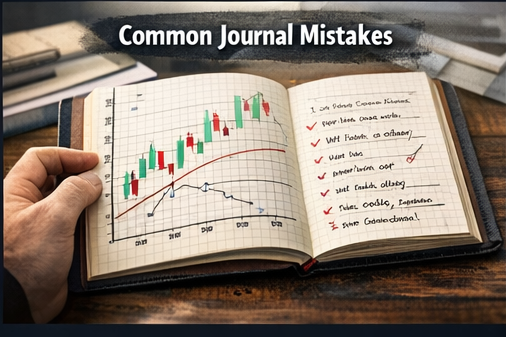
- Journaling only wins (ego protection)
- Not using screenshots
- Writing vague reasons: “looked strong”
- Not tagging setups consistently
- Not tracking mistakes separately from results
- Reviewing only when you’re losing
- Changing strategy every week instead of fixing execution first
The journal isn’t there to make you feel good. It’s there to make you better.
A Simple Trading Journal Template You Can Copy
Use these headings:
- Date / Time
- Pair / Market
- Timeframe
- Setup Tag
- Entry / SL / TP
- Risk (money + %)
- Result (R)
- Reason for Entry (2–4 lines)
- Checklist (Yes/No)
- Screenshot Links
- Execution Notes
- Emotional State (1–10)
- Mistakes (if any)
- Lesson / Rule update
If you do just this consistently, you’ll outperform 90% of traders who keep “searching for a better strategy.”
Your Journal Is Your Mirror
I’ll end with the truth I had to learn:
The market doesn’t care about your dreams, your bills, or your ego.
It rewards process.
A trading journal is how you build that process. It’s how you stop repeating the same expensive lessons. It’s how you become the kind of trader who doesn’t need motivation—because your system, your rules, and your self-awareness do the heavy lifting.