CFD risk warning: Trading leveraged products involves risk. This page is educational and not financial advice. Always verify the exact entity, fees, and conditions on the broker’s official pages before depositing.
Best for: Scalpers & EAs Platforms: MT4/MT5 + cTrader Watch: Entity differences

IC Markets Broker Review

IC Markets is known for tight raw pricing and broad platform support (MT4/MT5, cTrader, TradingView). The main decision is choosing the right entity and account model for your region and trading style.

Costs
Costs
/10
Raw pricing is competitive once you include commission; Standard is simpler but typically wider. Always compare spread+commission during your session.
Execution
Execution
/10
Market execution with variable spreads; quality is best in liquid hours and depends on account/platform routing.
Clarity
Clarity
/10
IC Markets operates multiple regulated entities. Protections, leverage and terms can differ, so confirm which entity your account is under.
MT4 + MT5 supported cTrader + TradingView Raw + Standard pricing
Snapshot
Key facts at a glance before you fund.
🧾
Accounts
Several account models across platforms (MetaTrader, cTrader, TradingView).
  • Raw Spread
  • Standard
  • Raw Pro tiers
Account availability and minimums can vary by entity/region; always confirm in your client portal.
💸
Pricing model
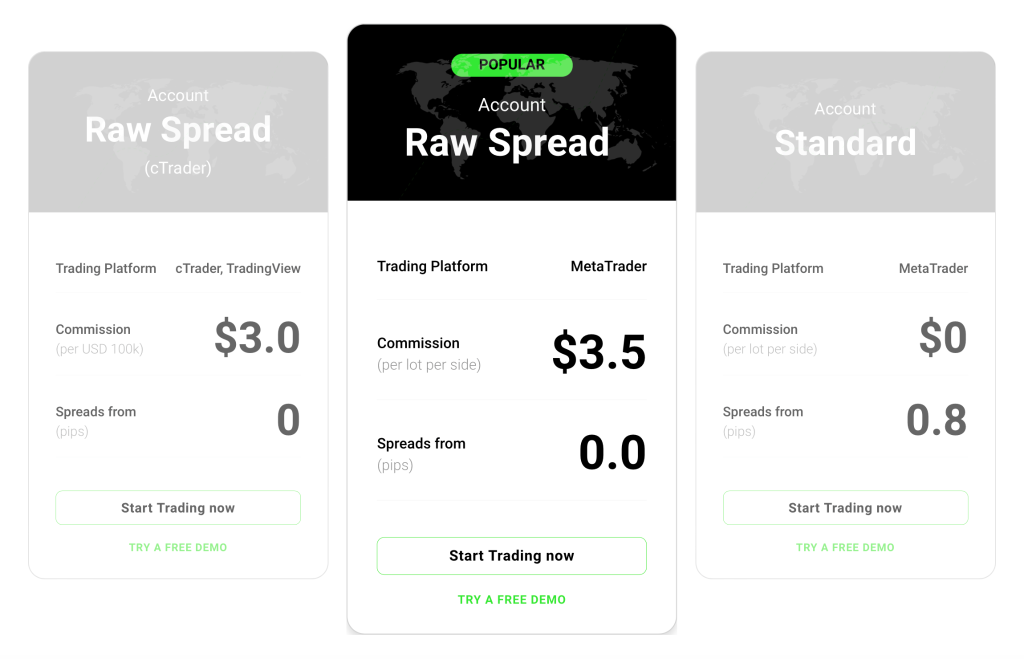
Raw accounts combine very low spreads with commission; Standard is spread-only.
  • 0.0 spreads (raw)
  • $3.5/lot/side (MT)
  • $3 per $100k (cT/TV)
Commission is the key cost driver for scalping; use spread+commission when comparing.
🗓️
Founded
Founded in 2007; operates multiple entities for different regions.
  • Since 2007
  • Multi-entity
  • Global reach
Your protections (e.g., leverage limits, negative balance protection) depend on the entity you onboard with.
Execution
Market execution with variable spreads; best conditions in liquid sessions.
  • Market exec
  • Variable spreads
  • Session matters
Rollover and news spikes can widen spreads and increase slippage on any broker.
🎯
Best for
Best fit: active traders prioritizing pricing and platform choice.
  • Scalping
  • EAs
  • Day trading
If you trade very small targets, commission + spread is what matters, not “spread from”.
⚠️
Watch
Main watch-out: entity differences and platform/account limitations.
  • Entity rules
  • Platform limits
  • Swap costs
Standard may not support every platform (often MetaTrader-only); verify before funding.

Pros & Cons

Pros What stands out
  • Platform spread: Raw pricing option with tight spreads in liquid hours (Raw Spread from 0.0 pips; avg EUR/USD ~0.1).
  • Clear pricing lanes: Standard (spread‑only) vs Raw Spread (raw spreads + commission) + cTrader pricing per $100k.
  • Withdrawals positioning: Broker reports no additional deposit/withdrawal fees; withdrawals have a daily cut‑off (12:00 AEST/AEDT) for same‑day processing.
  • Micro‑sizing option: 0.01 lot minimum size supported on MetaTrader; useful for testing and fine risk sizing.
  • Support availability: 24/7 support is advertised, with live chat and ticket/email options.
Cons What to watch
  • Entity differences: Protections, leverage caps, and product scope can differ by IC Markets entity/jurisdiction.
  • Execution nuance: Market execution means slippage is possible; spreads can widen during spikes/rollover.
  • Symbol‑dependent costs: Costs vary by platform and instrument (FX vs indices/stocks/crypto), and holding/financing charges apply overnight.
  • Payment rules can bite: No third‑party payments; withdrawals must go to a source in your name; bank/intermediary fees can apply.
  • News traders still get hit: Around major news, spreads/volatility can jump and stops/limits may fill with slippage.
🧩

Broker Profile

Reputation Scores

Trustpilot
/ 5
Forex Peace Army
/ 5
Investopedia
/ 5
FXEmpire
/ 5
DailyForex
/ 5
WikiFX
/ 10
Myfxbook
/ 5
BrokerChooser
/ 10
ForexBrokers.com
/ 5
🧬

Broker DNA

DNA /10
Safety
Costs
Execution
Platforms
Cashout
Support
📌

Broker facts behind the scores

🧾
Accounts & pricing
Write what traders pay in the real world.
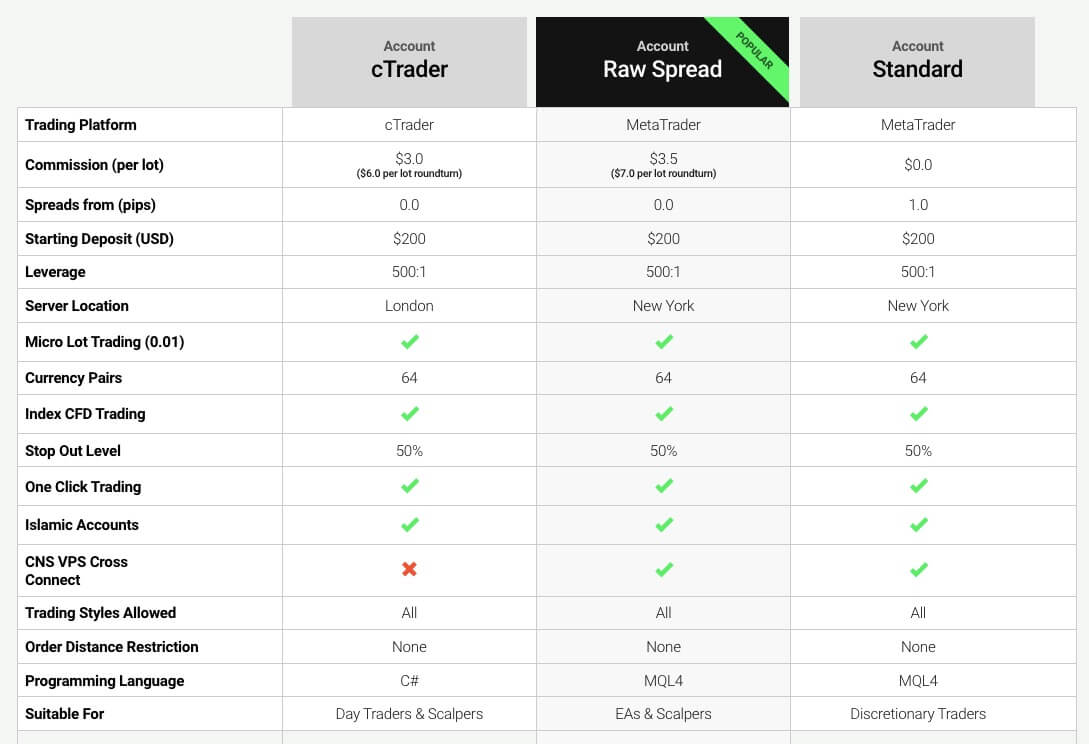
  • Main account typesStandard (spread-only), Raw Spread (MT4/MT5), Raw Spread (cTrader/TradingView), plus Raw Pro tiers (where available).
  • Minimum deposit$200 for Standard/Raw Spread (typical on global offering); higher minimums for Raw Pro tiers.
  • Commission (examples)MetaTrader Raw Spread: $3.50 per lot per side; cTrader/TradingView: $3 per USD 100k.
  • Spreads (examples)Raw: from 0.0 pips; Standard: from ~0.8 pips (varies by symbol and session).
Where to verify: Contract Specs (symbol) + the account pricing page.
🚀
Execution model
How orders behave on your account type.
  • Execution typeMarket execution; variable spreads.
  • RequotesRequotes are typically uncommon on market execution; fast markets can still shift price.
  • SlippagePossible both positive and negative; measure around your trading hours.
  • StopsStop behavior is affected by spread widening, volatility and stop-level rules.
Where to verify: Platform order logs + symbol stop/freeze rules in Contract Specs.
💳
Withdrawals reality
Time, fees, and the “net received” truth.
  • Top methodsCommon methods include cards, bank transfer and e‑wallets (availability varies by region).
  • Typical timeProcessing time depends on method and verification; test with a small withdrawal.
  • FeesBroker fees can be low, but provider/FX fees may apply depending on method/currency.
  • LimitsMethod-specific limits apply; confirm in your client portal.
Where to verify: Client portal history + a small live withdrawal test.
🛟
Support reality
Speed is nice — resolution quality matters more.
  • ChannelsLive chat, email/tickets, and phone numbers listed per region/entity.
  • First replyVaries by queue; chat is usually fastest for simple issues.
  • ResolutionComplex payment/compliance issues take longer; keep ticket IDs and evidence.
  • Best hoursBest results during business hours aligned with your servicing region.
Where to verify: Keep 2–3 ticket IDs and note time-to-solve, not just time-to-reply.
🛡️
Entity & protections
The entity you sign under changes the reality.
  • EntityYour IC Markets entity
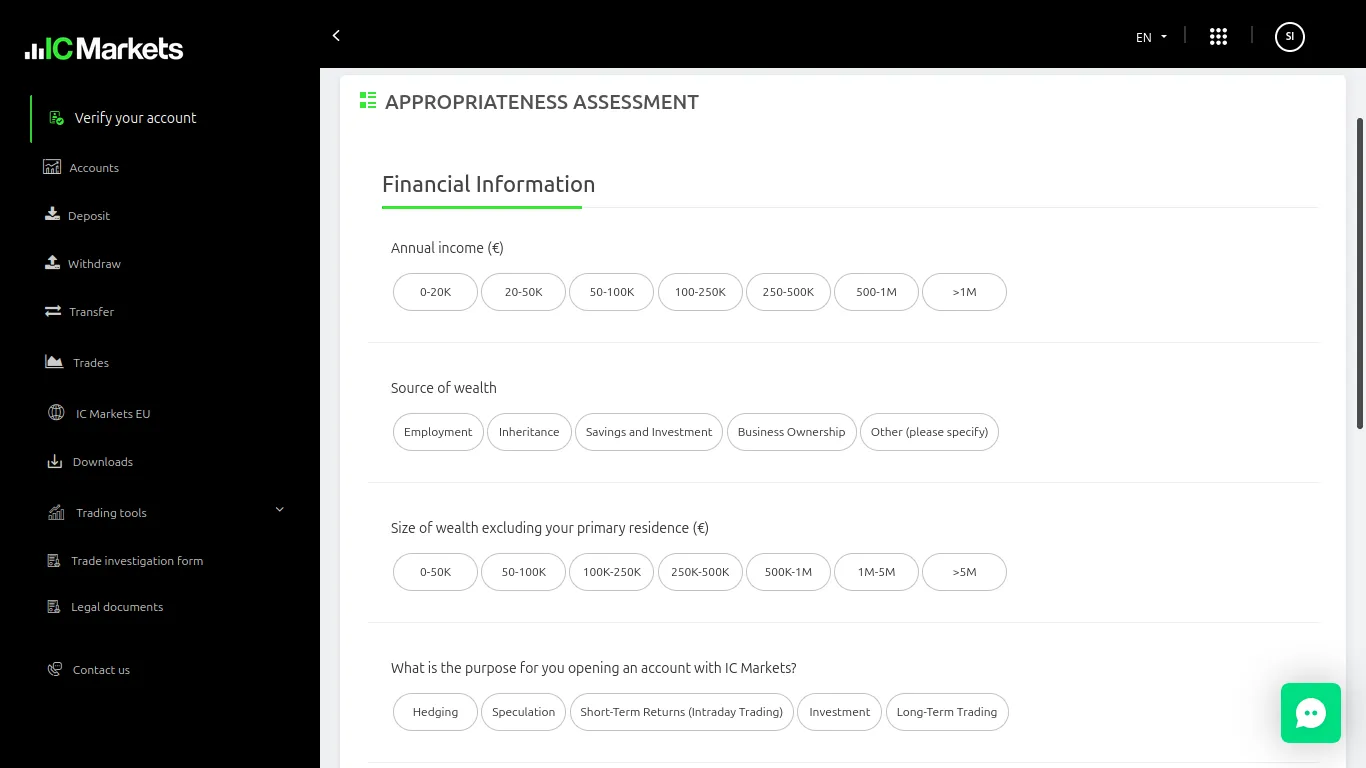
  • RegulatorASIC (AU), CySEC (EU), SCB (Bahamas), FSA (Seychelles) — depending on onboarding.
  • ProtectionsProtections (NBP, leverage caps, dispute schemes) can differ by entity and client category.
  • Leverage rulesLeverage limits depend on entity and instrument; EU retail is typically lower than offshore.
Where to verify: Client portal “legal documents” + the regulator register.
🧩
Broker policy snapshot
Rules that change the real outcome.
  • Margin call / stop out100% margin call; 50% stop out (MT4/MT5/cTrader).
  • Negative balanceEntity-dependent: EU retail has negative balance protection; some offshore entities may not.
  • Withdrawals processingCut-off 12:00 AEST/AEDT; broker fee is typically none, but bank/intermediary fees can apply.
  • Swap-free optionAvailable on Standard & Raw Spread (MT4/MT5/cTrader), subject to terms/eligibility.
Where to verify: Help Centre (margin/NBP), Funding & Withdrawal pages, and Swap-Free terms for your entity.
🎯

Who It’s For

🎯

Trader Fit Matrix

🎓
Good fit
Beginner
Good platform choice and clear pricing options, but you should pick the simplest account (often Standard) and verify the entity terms.
Strong
Scalper
Raw pricing on MetaTrader/cTrader is the main draw. Measure spread+commission during your exact trading window.
📰
Mixed
News Trader
Like most brokers, spreads can widen and slippage can increase around high-impact releases.
🌙
Good
Swing
Swaps/financing can dominate swing costs. Compare swap rates per symbol and consider swap-free eligibility if applicable.
🤖
Strong
Algo / EA
MT4/MT5 EA ecosystem plus cTrader automation. Test VPS/latency and broker stop-levels for your strategy.
🧩
Depends
Copy Trading
Copy/social options exist, but availability and provider quality vary; evaluate track records and fees.
🎯

Real‑life scenarios

Scalping majors
Many trades, tight stops, you feel costs + fills immediately.
  • Best pickRaw Spread (MT4/MT5) or Raw Spread (cTrader/TV)
  • What winsLow all‑in cost on majors + stable spreads in London/NY.
  • What hurtsCommission on tiny targets, spread widening at rollover, fast-market slippage.
  • Your testTrack all‑in cost (spread+commission) for 200 trades at your trade time.
Note: If your TP is small, cost dominates. Build a rule: “no trades when spread > X”.
🤖
MT4/MT5 EAs
Consistency matters more than “perfect” spreads once volume increases.
  • Best pickStandard or Swap‑Free (if eligible)
  • What winsSimple pricing and fewer entries can reduce friction.
  • What hurtsSwaps/financing and weekend gaps; leverage can amplify drawdowns.
  • Your testCompare swap rates per symbol and simulate 1–7 day holds.
Note: For swing, swaps are often bigger than spreads. Validate before choosing account.
📈
Swing & indices
When you hold trades, swaps and rollover behaviour can dominate results.
  • Best pickOnly if you trade news intentionally with wide stops and reduced size.
  • What winsFast platforms, stable connectivity, and disciplined risk controls.
  • What hurtsSpread spikes, gaps, and unpredictable slippage around releases.
  • Your testRecord spreads around 10 major events and review fill quality.
Note: If you don’t have a news plan, treat releases as “no‑trade windows”.
🏦
Monthly withdrawals
The “withdrawal experience” is method‑dependent — speed and fees vary.
  • Best pickMT4/MT5 Raw Spread (with VPS if needed)
  • What winsEA ecosystem, raw pricing, and stable server connection.
  • What hurtsStop levels, symbol spec changes, and execution differences in thin hours.
  • Your testForward-test on a small live account using the same server and VPS you’ll run.
Note: Lock your EA settings to the exact symbol specs and log every reject/slippage event.
🛡️

Safety

Regulation & Safety

ASIC (Australia)
International Capital Markets Pty Ltd — AFSL 335692.
Regulator
Strength
Tier‑1 style Retail rules AU oversight
  • Typical focus: Stronger conduct/complaints framework vs offshore entities.
  • What to check: Retail leverage and marketing rules can be stricter than offshore.
  • Reality: Confirm product availability (CFDs vs shares) by region.
Best for: Australia‑based clients prioritizing oversight
CySEC (EU)
IC Markets (EU) Ltd — CySEC 362/18.
Regulator
Strength
EEA rules NBP typical Leverage caps
  • Typical focus: EU retail leverage limits and risk disclosures.
  • Eligibility matters: Negative balance protection is typically part of EU retail framework.
  • Reality: Check compensation scheme details and eligibility for your country.
Best for: EEA clients wanting EU‑style protections
SCB (Bahamas)
IC Markets Ltd — SCB (license varies by listing).
Regulator
Strength
Offshore Higher leverage Check NBP
  • Typical focus: Often offers higher leverage than EU/AU entities.
  • What to check: Protections can differ; confirm negative balance and dispute process.
  • Reality: Always verify your exact legal entity in the client area.
Best for:Non‑EU clients who need higher leverage
FSA (Seychelles)
Raw Trading Ltd — FSA SD018.
Regulator
Strength
Global entity Higher leverage Terms vary
  • Typical focus: Common onboarding route for many non‑EU regions.
  • What to check: Check leverage, margin close‑out rules, and client classification.
  • Reality: Test execution and withdrawals with a small deposit first.
Best for: Global clients outside EU/AU regions
How to verify your entity (fast): open your client portal → look for the legal entity name in profile/terms/documents → match it to the regulator above. If the entity doesn’t match, treat the protections as different.
🛡️

Trust & Protections

Entity clarity
Multiple entities; protections depend on where you onboard.
Protection
Score
Multi‑entity Read T&Cs Know your regulator
  • Why it matters: Confirm the exact legal entity and regulator in your client area.
  • What to check: Leverage, disclosures, and dispute channels can differ by entity.
  • Good sign: Don’t assume features (NBP, GSLO, etc.) without checking your entity terms.
Regulatory coverage
ASIC/CySEC plus offshore entities used for global onboarding.
Protection
Score
ASIC CySEC Offshore options
  • Core idea: Higher-tier regulators can mean stricter conduct and marketing rules.
  • Reality: Offshore entities may offer higher leverage but different protections.
  • Best habit: Pick the entity that matches your risk and jurisdiction needs.
Client money handling
Segregation claims are common; verify what applies to your entity.
Protection
Score
Segregation Bank partners Read policy
  • What it is: Check whether client funds are held in segregated accounts (and under which rules).
  • Big catch: Understand who the trading counterparty and liquidity providers are (if disclosed).
  • Best move: Test withdrawal flow early to reduce operational uncertainty.
Negative balance
Often entity/retail-class dependent.
Protection
Score
Entity‑based Retail vs Pro Confirm
  • Plain English: EU retail frameworks typically include NBP; offshore terms may differ.
  • Where it breaks: High leverage increases gap risk — plan for extreme moves.
  • Trading reality: If NBP matters, confirm in writing for your account classification.
Pricing model
Market execution with variable spreads; outcomes depend on routing and conditions.
Protection
Score
Market exec Variable Measure fills
  • What to look for: Don’t rely on labels; evaluate actual fill quality and requote/slippage stats.
  • Why it matters: Check contract specs: stop levels, margin call/stop out rules, execution type.
  • Best habit: Prefer strategies robust to spread widening and fast-market fills.
Risk controls
Margin call / stop out and instrument rules matter for survival.
Protection
Score
Stop out Margin rules Symbol specs
  • Must-have: Know margin call and stop‑out levels for your platform/account.
  • Extra value: Confirm hedging/netting mode and how it affects margin.
  • Real protection: Avoid over‑leveraging into rollover/weekend gaps.
Account security
Standard best practices apply: 2FA, strong passwords, device hygiene.
Protection
Score
2FA Client area Alerts
  • What it does: Enable 2FA if available and lock down email access (it’s your reset key).
  • Your cost: Use unique passwords and avoid shared VPS credentials.
  • Best habit: Turn on trade/email alerts so you detect unusual activity fast.
Track record
Long operating history, but always validate current terms for your entity.
Protection
Score
Since 2007 Global Terms change
  • What you want: Treat third‑party ratings as directional, not definitive.
  • Proof matters: Read updated T&Cs and product schedules (they change over time).
  • Entity link: Keep your own execution/withdrawal log as your “truth source”.
📉

Trading Conditions

💸

Cost Breakdown

Your real all‑in cost is usually a mix of spread, commission, and swaps. These cards explain what each fee means and what to check on your exact account.

Spreads
The “hidden fee” inside every entry & exit
Component
Score
Impact % Raw tight Session‑sensitive
  • Raw “from”: 0.0 pips (from) on raw pricing
  • Where spreads bite: Widening during rollover and fast markets can matter more than the average. Your symbols and trading hours decide the real cost.
  • Your test: Log avg spread in your session for 1–2 weeks.
Quick check: (Compare spread+commission on your top 3 symbols during your usual hours.)
Commission
Often the trade‑off for lower spreads ($3.50 per lot per side (MetaTrader Raw Spread)/$3 per USD 100k (cTrader/TradingView Raw Spread))
Component
Score
Impact % Know your round‑turn Impacts small TP
  • Applies to accounts: Raw pricing accounts (platform-dependent)
  • Cost accounts: On tight targets (scalps), commission can be the majority of your cost even if spreads look near-zero.
  • Check: Confirm commission by platform and base currency.
Tip: (If you compare brokers, convert everything to “all‑in cost per round‑turn” for a 1.0 lot trade.
Swaps
Overnight financing — invisible until you swing‑trade
Component
Score
Impact % Symbol‑dependent Can dominate
  • Swing cost driver: For holds beyond intraday, swaps/financing often outweigh spreads.
  • Check: Compare swap rates for your instruments (long vs short).
  • If you avoid swaps: If swaps are a deal-breaker, consider swap-free eligibility (if available) or adjust holding periods.
Best for: (Best for intraday strategies; swing traders should treat swap as a first-class cost.
Other fees
Deposits/withdrawals, conversion, inactivity & extras
Component
Score
Impact % Low non‑trading Method matters
  • Method matters: Deposits are often free from the broker side, but payment providers and FX conversion can add costs.
  • Typical statement: No inactivity fee (common), provider fees may apply.
  • Practical move: Use the same deposit/withdraw method you plan to use live, and test a small withdrawal early.
Quick win: (Best move: do a small “fund → trade → withdraw” test before committing larger capital.
📈

Spread Stability

Asia
Tight
London
Very tight
New York
Moderate
Rollover
Rollover spike
🚀

Execution Feel

How execution tends to feel in real trading — clean fills in liquid hours, wider conditions on spikes, and what can impact entries/exits.
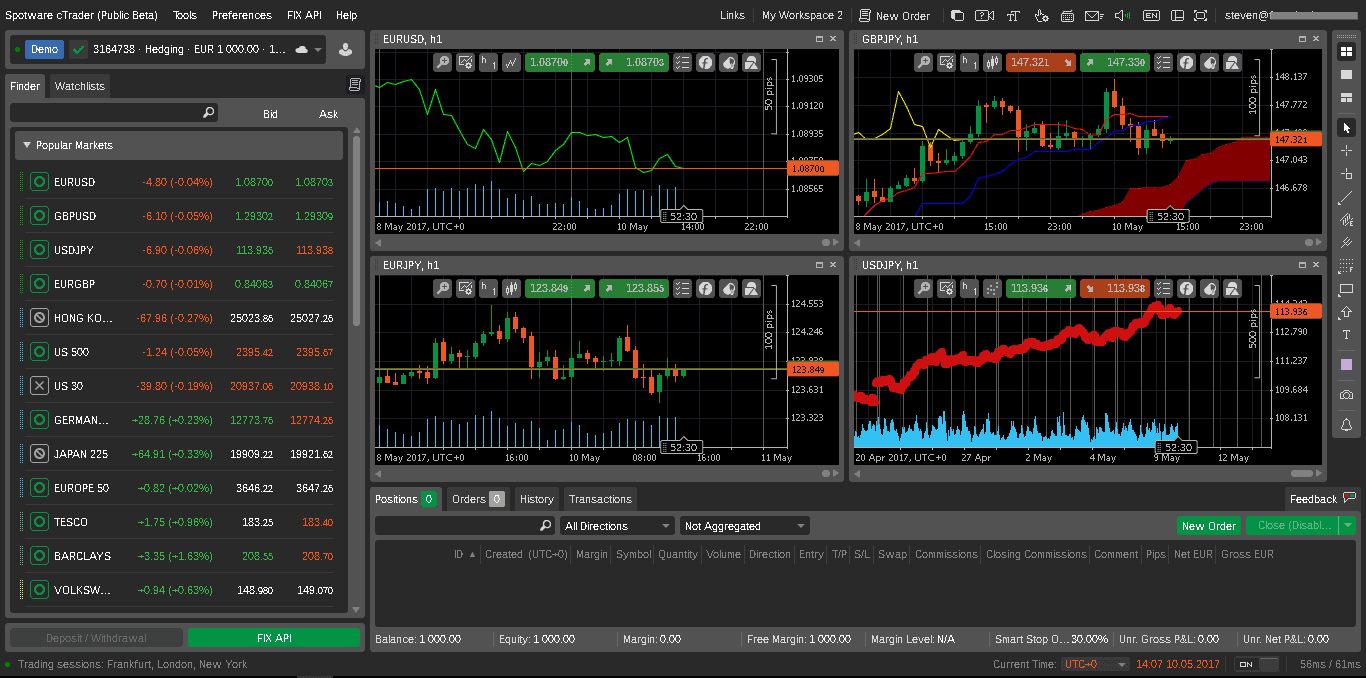
Execution type by account
Best overall feel when trading liquid symbols in London/NY hours.
Execution
Score
Raw (MT4/MT5)
Raw spread + per‑lot commission.
Fast, EA‑friendly
Raw (cTrader/TV)
Raw spread + per‑volume commission model.
DOM + charts
Standard
Spread‑only, fewer moving parts.
Simple costs
Means
“Good execution” usually means stable spreads, predictable fills, and low latency during your trading window.
Best for
Best for: scalpers, intraday, automation in liquid sessions.
Verify
Verify: run 100+ small trades and compare expected vs filled price (slippage distribution).
Best: Best move: test on a small live account, not only demo.
Liquid hours fill
Tends to be strongest on major pairs and main indices during core sessions.
Execution
Score
Means
Liquidity depth and spread stability are usually best in London/NY overlap.
Best for
Best for: high‑frequency style entries and tight stops.
Verify
Verify: watch Level II/DOM (cTrader) and record spread over time.
Best: Best move: focus testing on the symbols you actually trade.
Slippage reality
Slippage exists in fast markets; measure it rather than assume.
Execution
Score
Means
Market execution can fill better or worse than requested; news and thin hours amplify this.
Best for
Best for: strategies that tolerate occasional slippage.
Verify
Verify: log slippage points on entry/exit and bucket by session.
Best: Best move: avoid placing market orders into major news if your edge is thin.
Stops & freeze
Stop behavior depends on volatility, spread widening and broker stop-level rules.
Execution
Score
Means
Wider spreads can trigger stops earlier than expected on tight risk.
Best for
Best for: systems that place stops beyond “spread noise”.
Verify
Verify: check stop‑level/min distance and typical spread at your entry time.
Best: Best move: size your stop to include spread + typical volatility.
Big news behavior
Expect wider spreads and faster price gaps around top-tier releases.
Execution
Score
Means
High‑impact news can create price jumps where fills differ from requested levels.
Best for
Best for: traders explicitly trading news with wider risk limits.
Verify
Verify: compare spreads 5 min before/after major events on your instruments.
Best: Best move: if you don’t trade news, reduce exposure during releases.
Connection & VPS
Latency is a system problem: broker location, VPS, routing, and your ISP.
Execution
Score
Means
Stable ping and low packet loss matter more than peak speed.
Best for
Best for: EAs, scalping, multi‑entry systems.
Verify
Verify: measure ping to trade server and monitor disconnect events.
Best: Best move: use a nearby VPS if your strategy is latency‑sensitive.
Troubleshooting
Most execution “issues” trace back to spreads, stop levels, or platform settings.
Execution
Score
Means
Requotes are less common on market execution; the bigger culprits are price gaps and min distances.
Best for
Best for: diagnosing EA behavior and unexpected fills.
Verify
Verify: keep broker logs + screenshots of symbol specs during incidents.
Best: Best move: replicate on demo then on small live with the same server.

Account Types

Raw Spread (MT4/MT5)
Commission + raw spreads on MetaTrader.
Simplicity
Spreads from 0.0 $3.5/lot/side Min deposit $200
  • Pricing: Spreads from 0.0 pips + $3.50 per lot per side (≈$7 round‑turn).
  • Good when: Best when you scalp, run EAs, or trade liquid pairs with tight execution windows.
  • Watch‑outs: Commission makes tiny targets harder; confirm symbol specs and average spreads in your session.
Best for: Scalpers, EAs, day traders
Raw Spread (cTrader/TV)
Raw pricing on cTrader + TradingView.
Small‑Size
cTrader + TV $3 per $100k Min deposit $200
  • Pricing: Spreads from 0.0 pips + $3 per USD 100k (commission model).
  • Good when: Best when you want cTrader features (DOM/UX) or TradingView charting with raw pricing.
  • Watch‑outs: Commission model differs from “per lot”; check how it maps to your typical position size.
Best for: Day traders, scalpers, chart‑first traders
Standard
Spread‑only pricing (no commission).
Handling
No commission Spreads from 0.8 Min deposit $200
  • Pricing: Spread‑only; spreads from ~0.8 pips (varies by symbol and session).
  • Good when: Best when you prefer simple costs and trade less frequently.
  • Watch‑outs: All‑in cost may be higher than Raw for active trading; platform options may be limited.
Best for: Beginners, casual traders
Raw Pro
Lower commission tier (early access).
Cost Focus
$1.5/lot/side Spreads from 0.0 Min deposit $5,000
  • Pricing: Spreads from 0.0 pips + $1.50 per lot per side (≈$3 round‑turn).
  • Good when: Best when you trade large volume and qualify for this tier.
  • Watch‑outs: Availability may be limited; check eligibility and platform restrictions.
Best for:High‑volume traders
Raw Pro+
Lowest commission tier (high minimum).
Spread Control
$1.0/lot/side Spreads from 0.0 Min deposit $100k
  • Pricing: Spreads from 0.0 pips + $1.00 per lot per side (≈$2 round‑turn).
  • Good when: Best when you meet the high minimum and need the lowest commission tier.
  • Watch‑outs: High minimum deposit; ensure you understand entity protections and liquidity conditions.
Best for: Professional / high‑capital
Swap‑Free (Islamic)
Swap‑free option on request (where available).
Hold‑Friendly
By request Terms vary Eligibility rules
  • Pricing: Swap‑free terms vary by entity and symbol; other fees may apply instead of swaps.
  • Good when: Best when overnight financing is a key constraint and you qualify for swap‑free terms.
  • Watch‑outs: Not available for all clients/instruments; confirm conditions in writing before funding.
Best for: Swing traders needing swap control
🧩

Platform Console

MT4
Available
Classic EA ecosystem
  • Good for: Lightweight desktop trading + massive EA ecosystem.
  • Best for: MT4 EAs, scalping setups
Readiness
MT5
Available
Modern tester + depth
  • Good for: More markets, timeframes and order types than MT4.
  • Best for: Multi‑asset traders, MT5 EAs
Readiness
WebTrader
Available
Browser terminal (no install)
  • Good for:Quick access without installs; good for monitoring.
  • Best for: Travel / backup access
Readiness
Mobile App
Available
iOS/Android trading + account controls
  • Good for: Manage positions, alerts, quick risk edits.
  • Best for: Monitoring and emergency actions
Readiness
TradingView
Available
Charts + alerts (broker link)
  • Good for: Strong charting + watchlists; usable with Raw pricing (platform-dependent).
  • Best for: Chart‑first discretionary traders
Readiness
cTrader
Available
Fast UI + level‑2 depth
  • Good for: Modern UI, DOM, detachable charts; good for active execution.
  • Best for:Day traders and scalpers
Readiness
Copy Trading
Available
Follow strategy providers
  • Good for: Copy/social via third‑party or platform ecosystems (availability varies).
  • Best for: Small allocations with strict limits
Readiness
API / FIX
Available
Automation + advanced routing
  • Good for: Advanced routing/automation for eligible clients.
  • Best for: Latency‑sensitive automation.
Readiness
🧾

Operations & Proof

🏦

Cashout Timeline

InstantWallet / crypto
MinutesLocal rails
HoursCards
1+ dayBank wire
⏱️
Processing reality
Processing speed depends on method and verification status.
  • 24/7: Do one small withdrawal early to learn your typical processing time.
  • If not instant: Best for: traders who want operational certainty before scaling size.
  • Arrival time: Keep KYC documents updated to avoid delays during withdrawal.
🔁
Method matching
Name matching is strict: funding source should match account holder.
  • Common rule: Use the same name on your payment method as on your trading account.
  • Name match: Best for: avoiding payment reversals and support tickets.
  • If stuck: If you change banks/cards, update your client area before requesting withdrawals.
💱
Fees & FX leaks
Fees are often external: FX conversion and bank/intermediary costs.
  • Broker vs provider: Check currency conversion spreads and intermediary bank fees for wires.
  • Conversion: Best for: anyone depositing in a different currency than account base.
  • Test: Pick an account base currency that matches your main funding currency when possible.
🧯
Failure handling
Most failures come from method limits, compliance checks, or mismatched details.
  • Don’t spam retries: If a withdrawal fails, confirm method limits and re‑submit with identical details.
  • Check basics: Best for: troubleshooting before escalating to support.
  • Escalate cleanly: Include transaction IDs, timestamps, and screenshots when contacting support.
Common deposit methods
Visa Mastercard Bank Transfer Skrill Neteller PayPal Binance Pay Crypto (USDT)
Availability depends on country + entity + account verification.
Common withdrawal methods
Visa Mastercard Bank Transfer Skrill Neteller Binance Pay Crypto (USDT)
Withdrawals usually require matching ownership + completed KYC.
🧑‍💻

Support Console

Support /10
Live chat
Fastest
Email tickets
Good for docs
Phone support
Varies
💬
Live chat
Live chat is the fastest path for account/admin questions.
  • Availability: Availability can vary by region; check the website/client portal for current hours.
  • Best use: Best for: platform access, funding/withdrawal status, basic troubleshooting.
  • Tip: Ask for a ticket number and a written summary of the resolution.
📩
Tickets & email
Email/tickets are better for compliance, documents, and complex cases.
  • Reply target: Target: same day to 1–2 business days (varies by queue).
  • Best use: Best for: payment issues, verification, disputes, detailed technical logs.
  • Tip: Attach logs/screenshots and list exact server, symbol, and timestamps.
📞
Phone support
Phone support can help with urgent account access and verification.
  • Availability: Availability varies by entity and region; use numbers listed on the official contact page.
  • Best use: Best for: urgent access problems or time‑sensitive admin issues.
  • Tip: Before calling, prepare your account ID and the exact issue timeline.
🧠
Self‑serve clarity
Self‑serve tools reduce support dependency if you know where to look.
  • Contract Specs: Contract specs: spread type, commission, swap, stop levels, trading hours.
  • Client area: Client area: entity details, funding methods, statements, platform downloads.
  • Help Center: Help center: FAQs for KYC, deposits/withdrawals, platform setup.

Screenshots

FAQ

What is the minimum deposit?
IC Markets states a minimum deposit of USD 200 (or currency equivalent) to start trading.
Which account types are offered?
Common options include Standard (no commission, spread mark‑up) and Raw Spread (commission on MetaTrader). cTrader pricing is typically commission per USD 100k traded; swap‑free is available where eligible.
Does it charge deposit/withdrawal fees?
IC Markets says it does not charge additional fees for deposits or withdrawals, but your bank or payment provider may charge fees.
How fast are withdrawals processed?
Withdrawal requests submitted before 12:00 AEST/AEDT are processed the same business day; after that, they are processed the next business day. Arrival time depends on method.
© ForexPeer